Sports analytics
AFCON predictions
Monte Carlo simulations nailed the contenders' odds while the group stages were still chaotic (I predicted the Senegal win a month before the final!). Elo ratings and form features fed a LightGBM ensemble, and refreshed live because we're impatient.
Marwa Bouabid
Why this project?
This project is a passion project. I am from Morocco and we hosted AFCON this year. Attending matches during the break was a once in a lifetime experience. I wanted to learn how to use Monte Carlo Simulations and Airflow, so I decided to go for this. Turns out I learned much more...
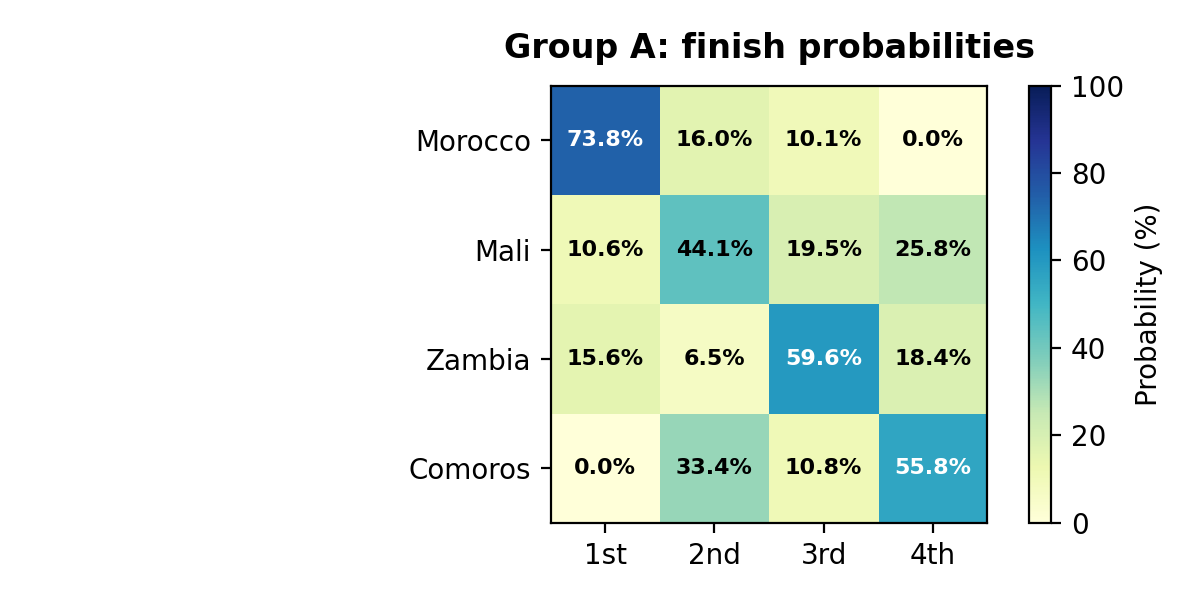
Group A
Early finish probabilities while group matches were still live.
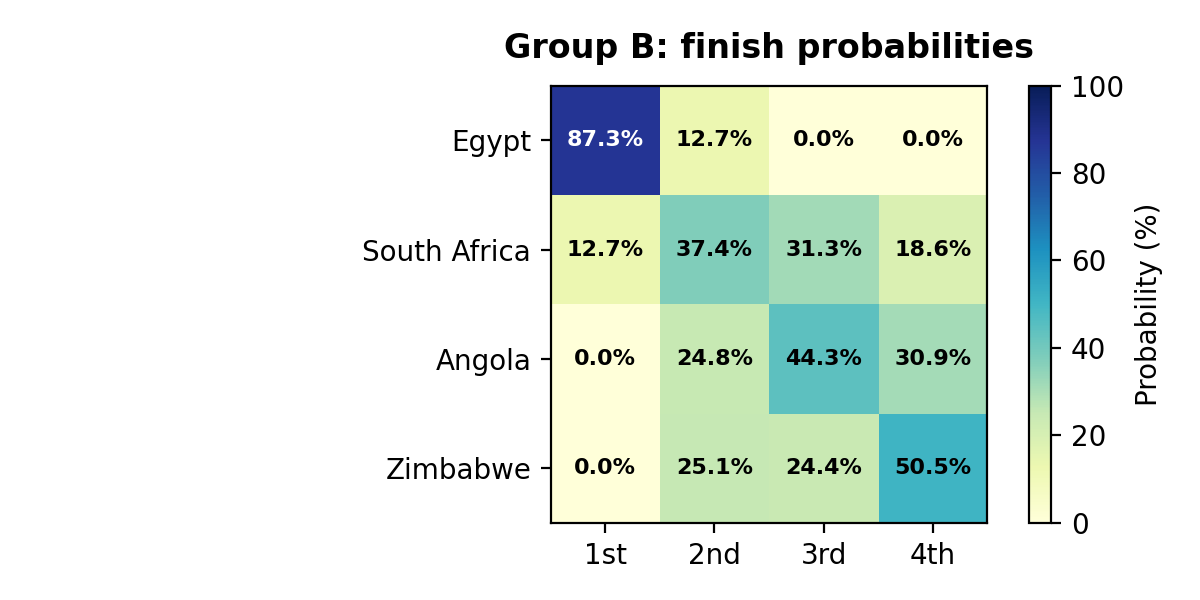
Group B
Monte Carlo sims updating after each match.
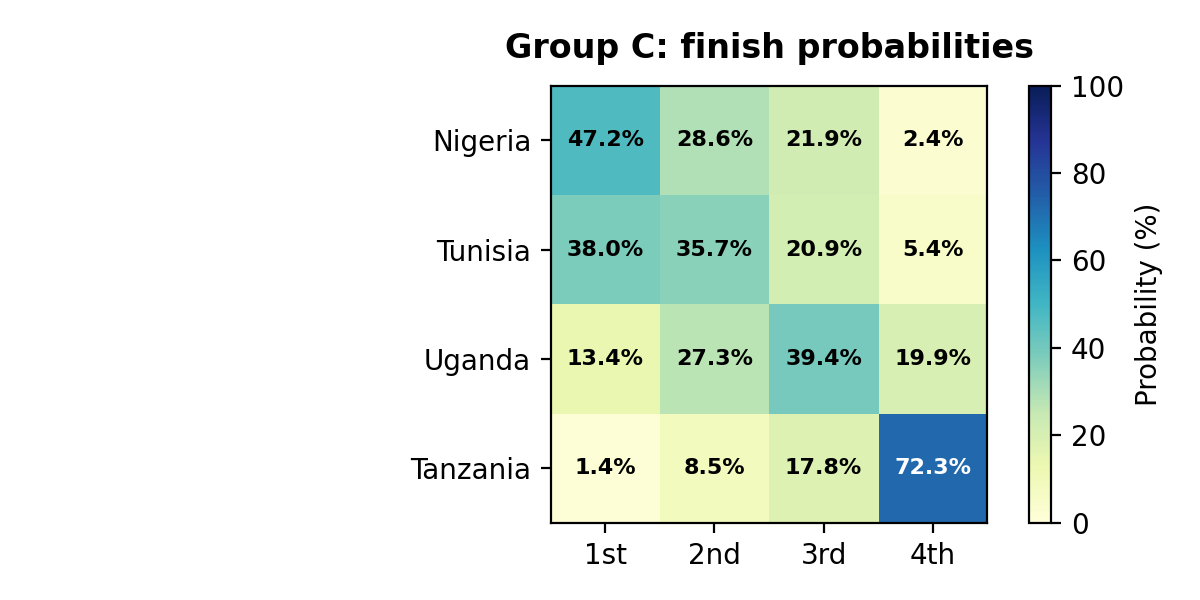
Group C
Odds surfaced in the dashboard for fans and analysts.
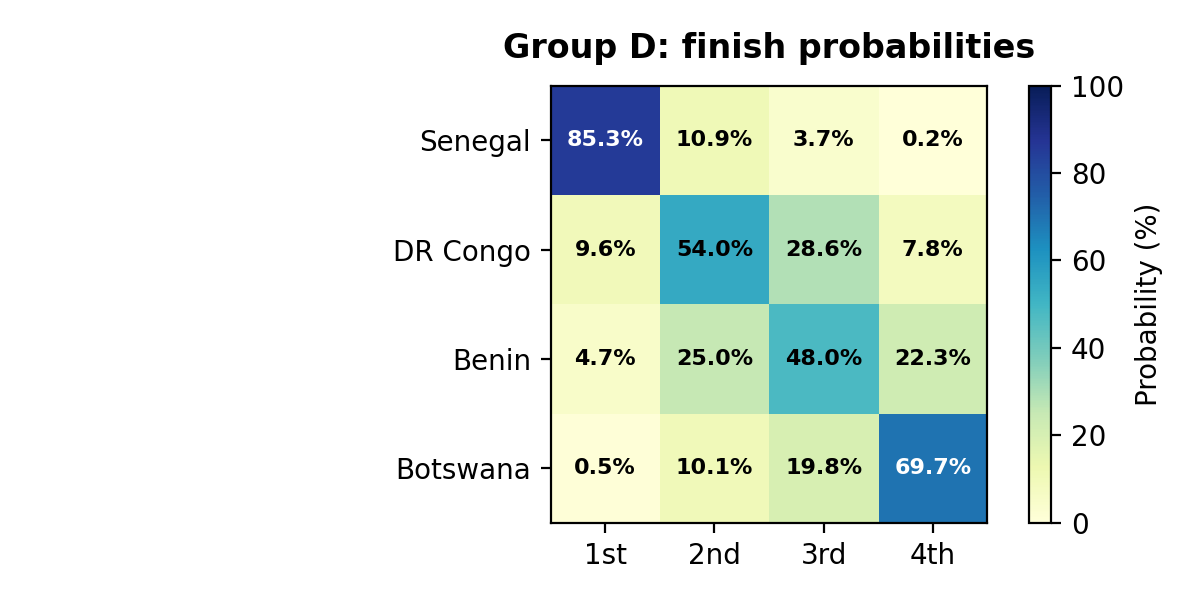
Group D
Probabilities refreshed nightly via Airflow.
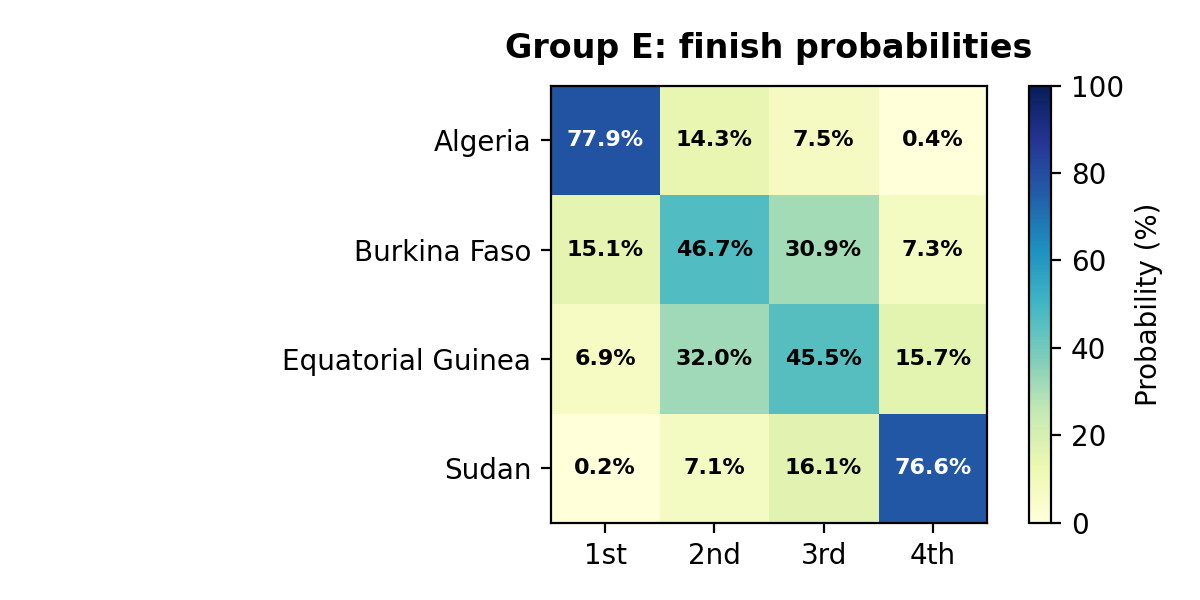
Group E
Tournament outlook before knockouts.
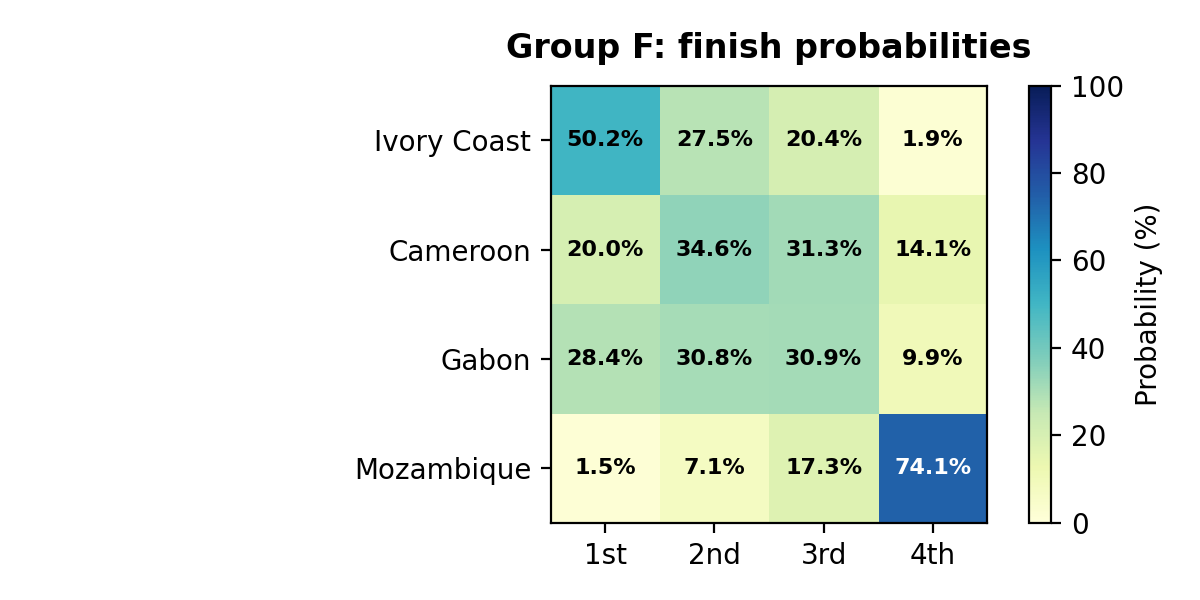
Group F
Live shifts as matches concluded.
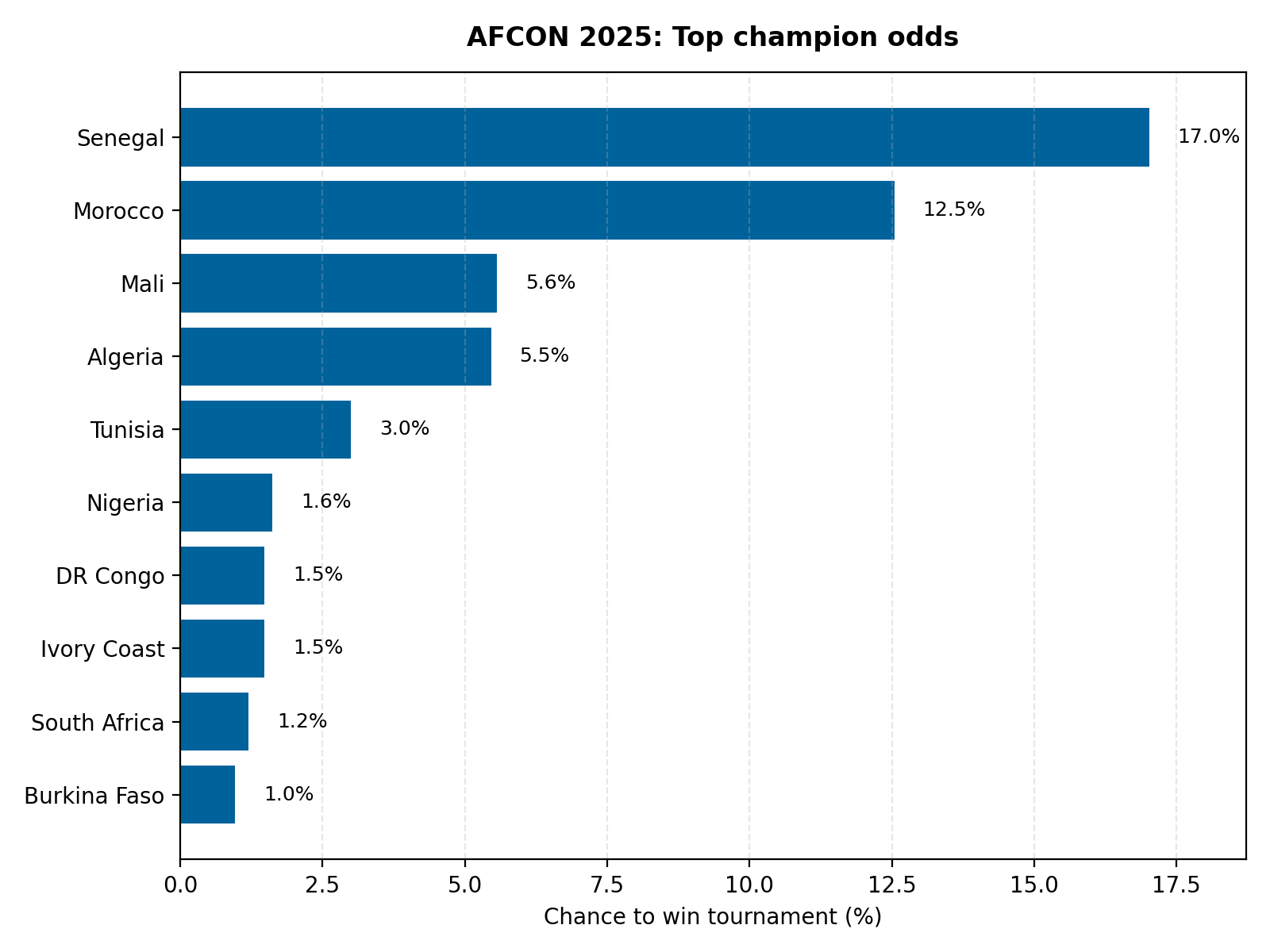
Champion odds
Top contenders by win probability.
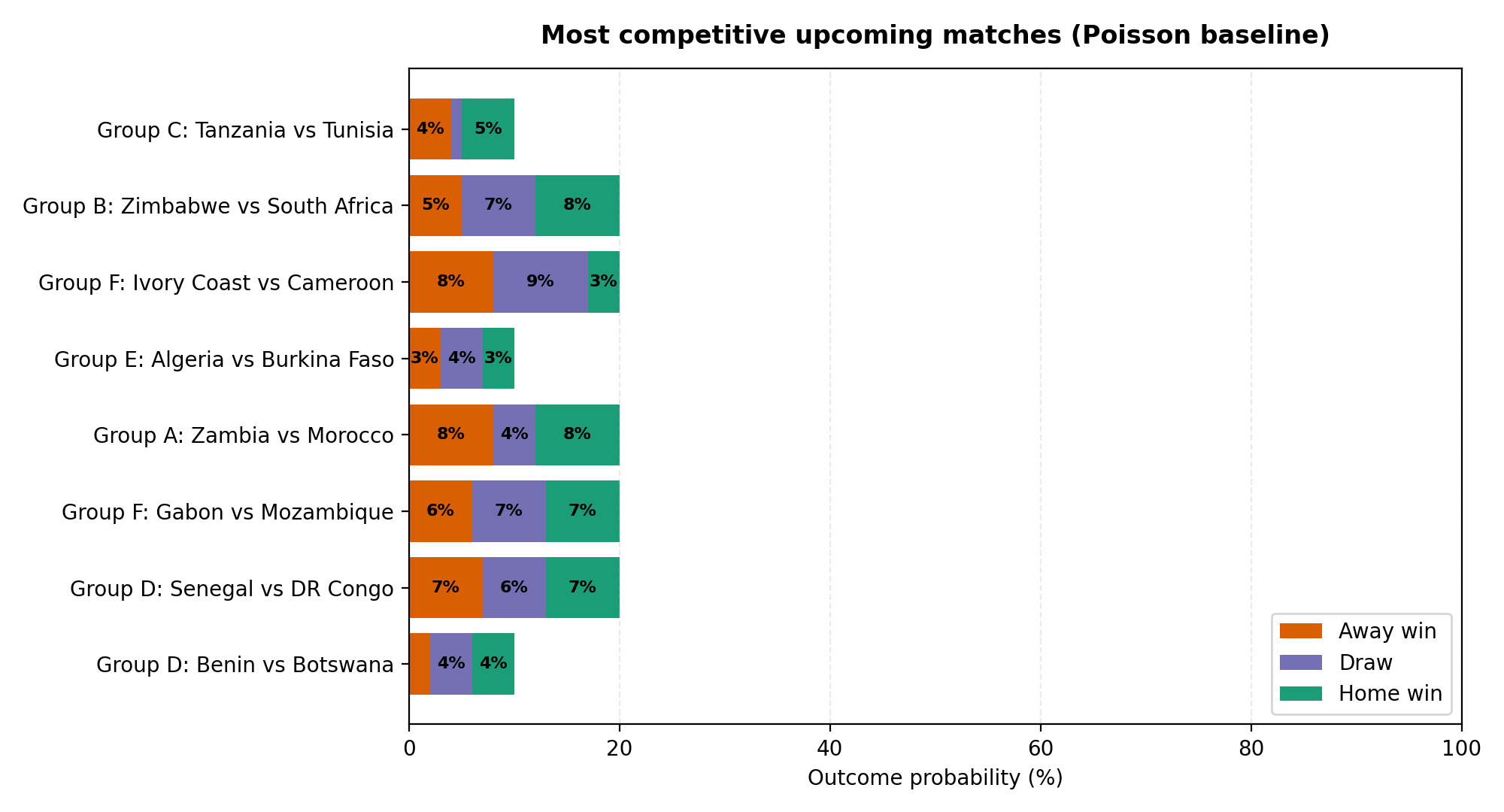
Competitive matches
Tightest fixtures by outcome mix.
Project summary
We built a match-by-match forecasting engine using rolling team strength and fatigue factors, ingesting historical match results, live fixture updates, and geospatial data for travel metrics. Our Monte Carlo engine churned out percentage odds for every contender, tracking their rise (and fall) as matches concluded.
Airflow handled the daily data pulls and reruns, keeping the dashboard fresh. We tracked Brier scores and applied isotonic calibration because uncalibrated probabilities are just guesses in a suit.
Highlights
- Monte Carlo sims gave us early, accurate probabilities for top teams, even when the group stage looked like a coin toss.
- Mashed up pre-tournament Elo, recency-weighted form, and travel distance into a compact, high-signal feature set.
- Airflow kept our ingest and scoring pipelines on a tight leash, ensuring viewers saw up-to-the-minute odds.
- A calibration pass boosted reliability by 8% on held-out fixtures. Trust, but verify.
- The dashboard lets viewers slice odds by phase and compare our math against bookmaker benchmarks.
Business problem
Broadcasters and analysts need trustworthy, real-time odds to brief audiences without relying on betting markets. We solved that.
Results
Findings: Our early odds closely mirrored the final outcomes. Calibration curbed overconfidence, and SHAP values revealed that travel fatigue is a real buzzkill for teams.
Tech stack
- Python
- LightGBM
- Airflow
- Streamlit
- SHAP
Analytics & methods
- Feature selection
- Brier score tracking
- Isotonic calibration
- SHAP explainers
Download a PDF with all references used for this project.
Download references